Push and Pull: Running Paid Ads with a CRO Mindset
Paid ads have run through my whole career, from audibene in Berlin to Clevermann and a luxury real-estate developer in Vietnam. A solid CRO foundation lets me treat push and pull as different traffic, each with its own job in the journey, and judge every campaign by what it starts, not by clicks.
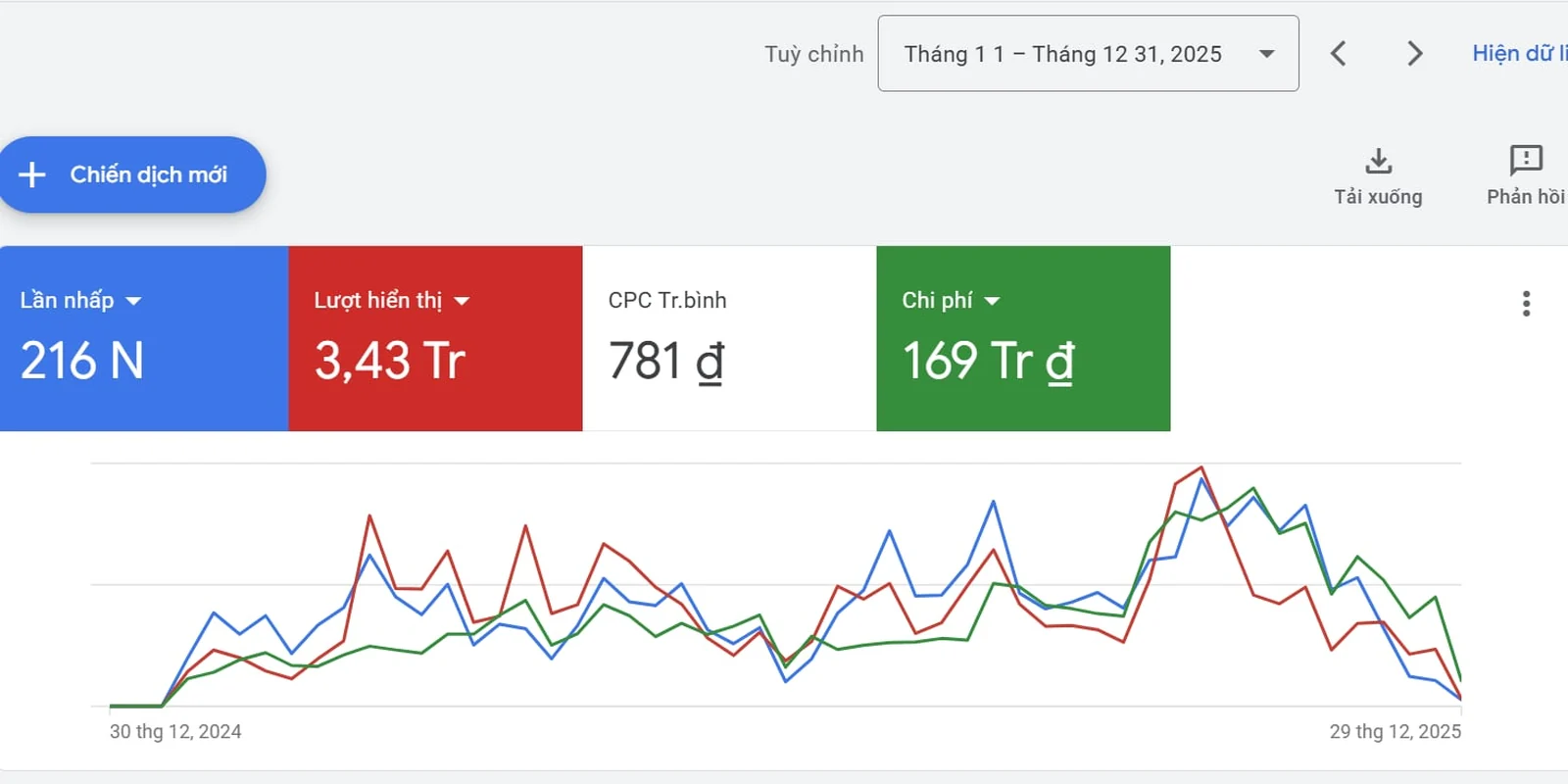
- Milestone: 216,000 clicks from Google Ads in 2025, at ~VND 781 per click
- Milestone: 3,024 Messenger conversations started from Meta ads at ~USD 2.23 each in ten weeks
- Milestone: Meta ads reached 440,000 people with 1.69M impressions in the same ten weeks
Meta Ads · Google Ads · Google Business Profile · evidence from Clevermann
The context
Paid ads are not a side skill for me. They run through every role I have had:
- audibene, Berlin. 200+ A/B tests across ad and landing-page journeys in 11 markets: the ad and the page were tested as one journey.
- Clevermann, Ho Chi Minh City. I ran the Meta and Google accounts myself, with more than VND 200M a month in ad spend across channels. The screenshots on this page come from here.
- A luxury real-estate developer. Moving Meta campaigns to psychology-based lead forms tripled monthly leads and cut cost per lead by about 75%. See the case study.
Different products, one constant: people decide in stages. Studying in Germany or buying an apartment is not an impulse purchase. People think for months, talk to family and come back many times. The ad is only the first step of that journey, and it has to fit the moment the person is in.
Push and pull are different traffic
The most expensive mistake in paid media is treating all traffic the same.
Pull traffic comes from people who are already looking. On Google Search and Google Maps, someone types “du học nghề Đức” or our brand name. The intent is there. The job is to match the question exactly, answer it fast and make the next step obvious.
Push traffic comes from people who were not looking. On Facebook and Instagram, the ad interrupts a scroll. Most of these people are early in their decision: they know they want a better future, not yet that Germany or Clevermann is the answer. Asking them to fill in a long form is asking too much, too soon.
How a CRO foundation shaped the ads
I ran the ad accounts with the same lenses I used for 200+ A/B tests at audibene.
- Relevance first. One campaign per program and audience, so every ad and every message spoke to one situation, not to everyone.
- The right first step. On Meta, campaigns were optimised for a Messenger conversation, a small and easy yes, not for clicks. A conversation lets a counsellor meet the person where they are.
- Awareness, not just targeting. Push ads spoke to the problem and the possible future. On search, ads and pages answered concrete questions: cost, timeline, requirements.
- Judge by what happens after. A cheap click means nothing if it never becomes a consultation. Every campaign was read against the next steps in the funnel, not just its own dashboard. Read the story.
Push and pull also work together. People who first met Clevermann in a Facebook feed later searched for us by name: the brand is the top search term on our Google Business Profile.
Results
| Channel | Role in the journey | Result |
|---|---|---|
| Google Ads (2025) | Pull: people already searching | 216,000 clicks and 3.43M impressions at ~VND 781 per click (~VND 169M in total) |
| Meta Ads (Nov 2025 – Jan 2026) | Push: starting the conversation | 3,024 conversations at ~USD 2.23 each, 440,000 people reached |
| Google Business Profile | Pull: brand and local search | Top search terms were the Clevermann brand and “du học nghề Đức” |
These ads fed the funnel described in the Clevermann case study, where cost of sale fell from about 30% to below 10% of revenue.
What I learned
Paid ads and conversion are one system. The ad decides who arrives and in what frame of mind; everything after decides whether they stay.
Push traffic needs a reason to start. Pull traffic needs a reason to stop looking. Knowing which one you are paying for changes the ad, the page and the first question you ask.